Community founder
Anastasiia Tij, founder of Vibe South of France
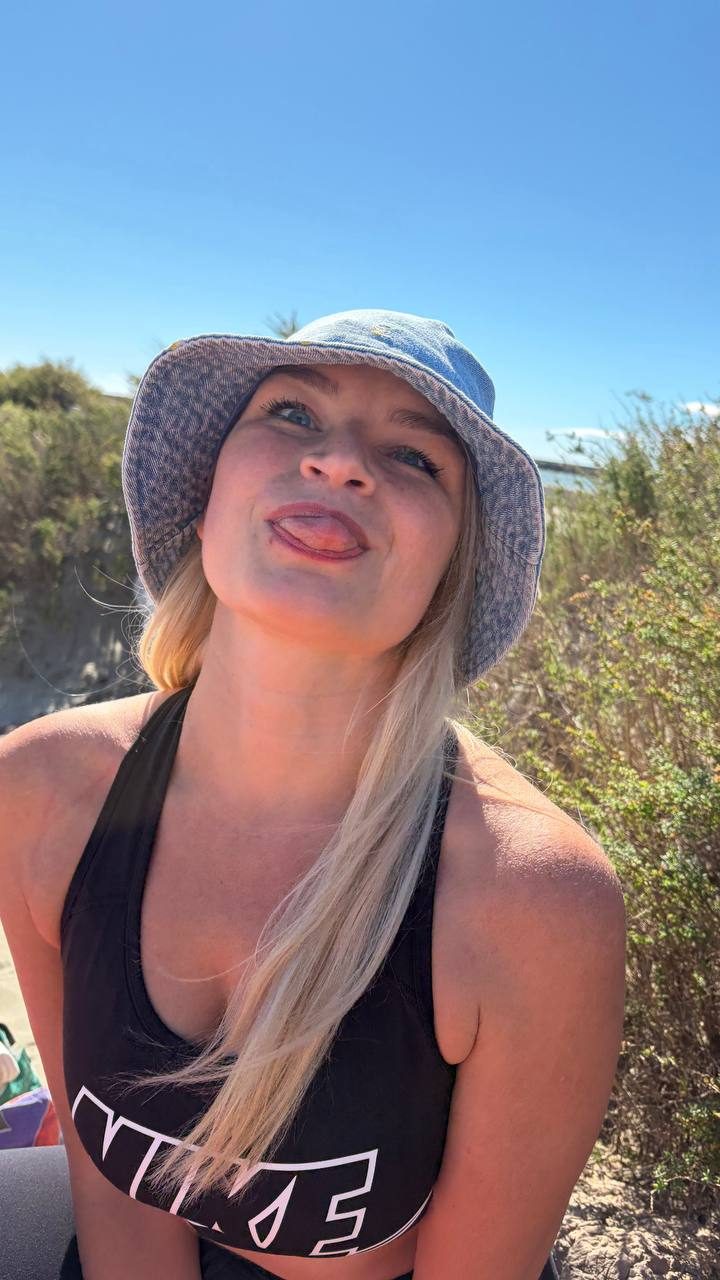
Anastasiia Tij (also known as Anastasiia Korshunova) founded Vibe South of France, a community of Russian speakers in the South of France that began in May 2025 with a simple craving for shashlik. She lives in Montpellier and Toulouse. For that first trip she expected 10-15 friends - 80 people came, kids and all.
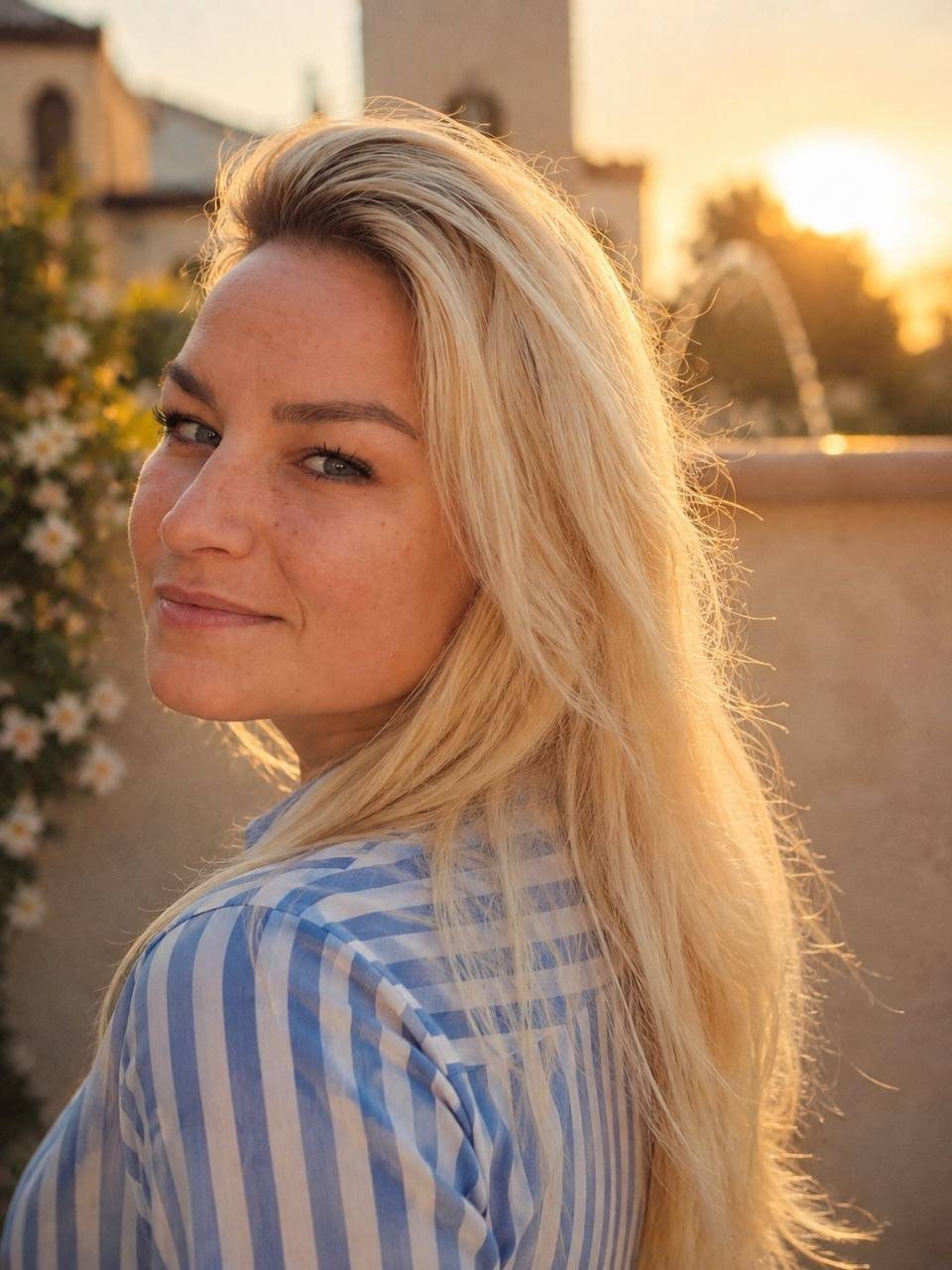
From here on, Anastasiia tells her own story.
A little about me
I’m from Yaroslavl - a sleepy little provincial town, as I like to call it. It’s the kind of place where a three-litre jar is a “баллон” (ballon, literally a gas cylinder) and a mop is a “лентяйка” (lentyaika, a “lazybones”): that’s how people talk in Yaroslavl. And the town, mind you, is good-looking and has a pedigree. Russia’s first professional theatre, the Volkov, was born here, and here stands Yaroslav the Wise - the very one who used to look out at us from the 1,000-rouble note.
My schooling was like everyone’s. An ordinary school, then a technical college where they taught me computer science, then an institute of finance and economics, this time by correspondence: by then I was already working.
What work taught me
I started work at eighteen, at a big company that made craft kits for children. Allow me a bow here to my first boss: he gave me a chance and showed me that you can grow fast.
I started at the very edge of the map - Chukotka. The first boxes of kits flew there by plane, then on by helicopter, and how I got that contract agreed I still don’t know. But it came off: somewhere at the end of the earth, children got their kits. By twenty I was already working with the first nationwide retail chains, and the distance from Chukotka to Moscow no longer frightened me.
Then came another large company. I joined as a manager’s assistant and left as a lead manager for retail chains - a key account manager, as they’d say in the West. More than ten years: nationwide chains from European Russia to the Far East, orders from partners of the 2014 Sochi Winter Olympics, nearly all of the company’s big projects.
In practice, that meant this. Once a year, sitting down with the buyers and agreeing terms for the whole of the next year: bonuses, marketing, how and when we’d deliver. Dreaming up collections to fit a particular chain’s format and writing the specs for production. Holding stock in reserve for every client and planning shipments so that the shelf wasn’t bare by the seasonal peak. Keeping an eye on receivables. Teaching my operators and assistants that every chain has its own whims about paperwork and deadlines. And going to trade fairs to show what was new.
Looking back, I can see that life had been packing my suitcase for emigration long before I left. Negotiating, doing the sums, bringing people together, not being scared of distance - all of that I later took out of that suitcase, in a country whose language I didn’t speak.
How I ended up in France
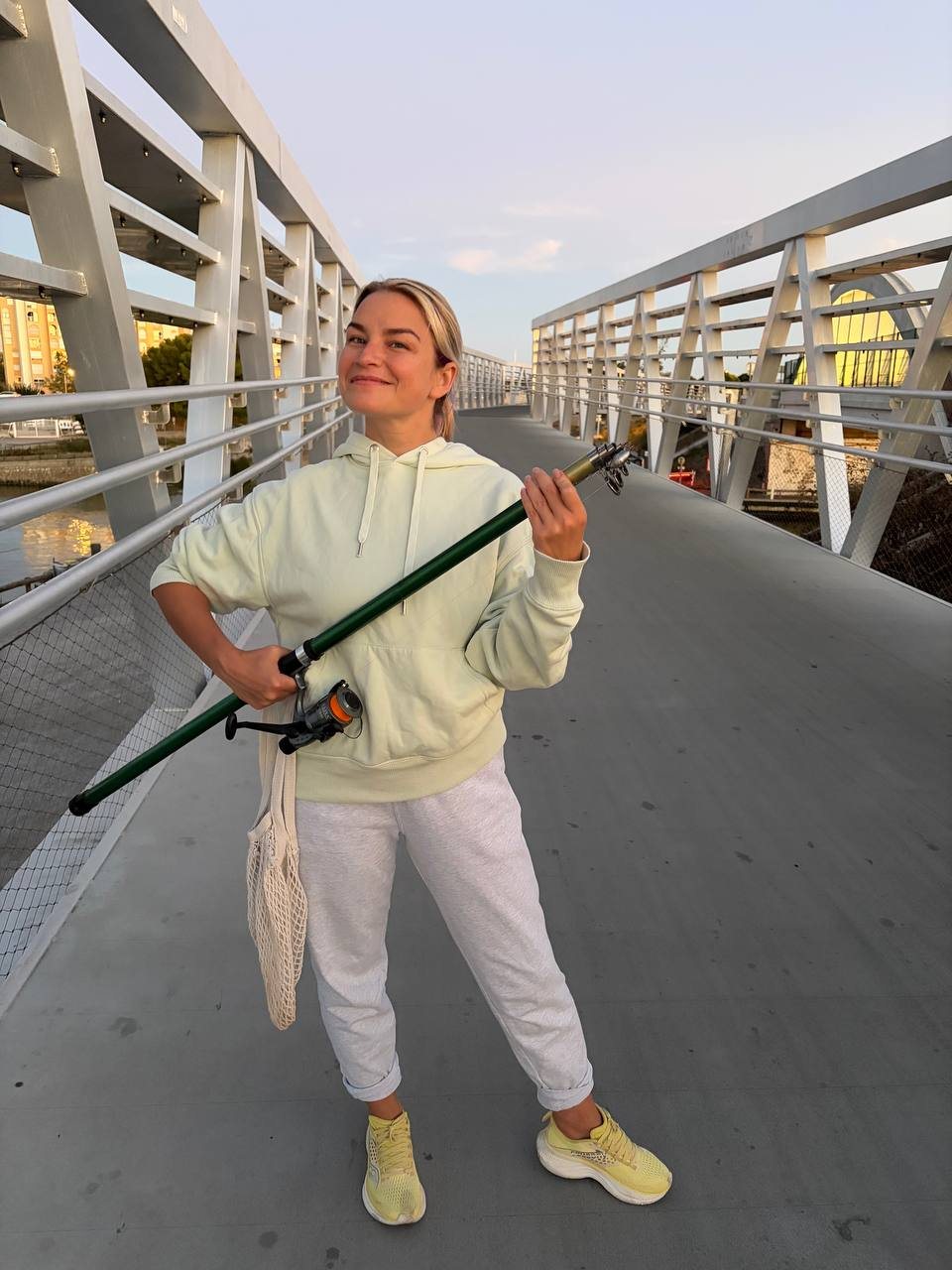
Family circumstances brought me to France. I didn’t mean to stay - and I stayed. What came next is what everyone goes through: papers, waiting, more papers. France doesn’t open the door at the first knock for anyone, and it didn’t for me: the wait dragged on for three and a half years.
I had no French at all. Not a single word. In the South, when you get off the bus, you say goodbye to the driver: “au revoir”. Only the French swallow half their sounds, and all my ear caught was “uva”. So that’s what I said - off the bus I’d hop with a cheerful “uva!”. The drivers roared with laughter, and I couldn’t work out what was wrong.
Then Paul-Valéry University took me onto its French courses, and I started at A1 - with the alphabet. Five semesters. Those years weren’t lost: I learned the language, spent a year and a half volunteering at a charity food distribution - taking deliveries in, sorting them, handing them out - and I waited.
How visas and residence permits work in general is covered in the site’s Moving to France section: the general rules, not anyone’s personal story.
How Vibe South of France began
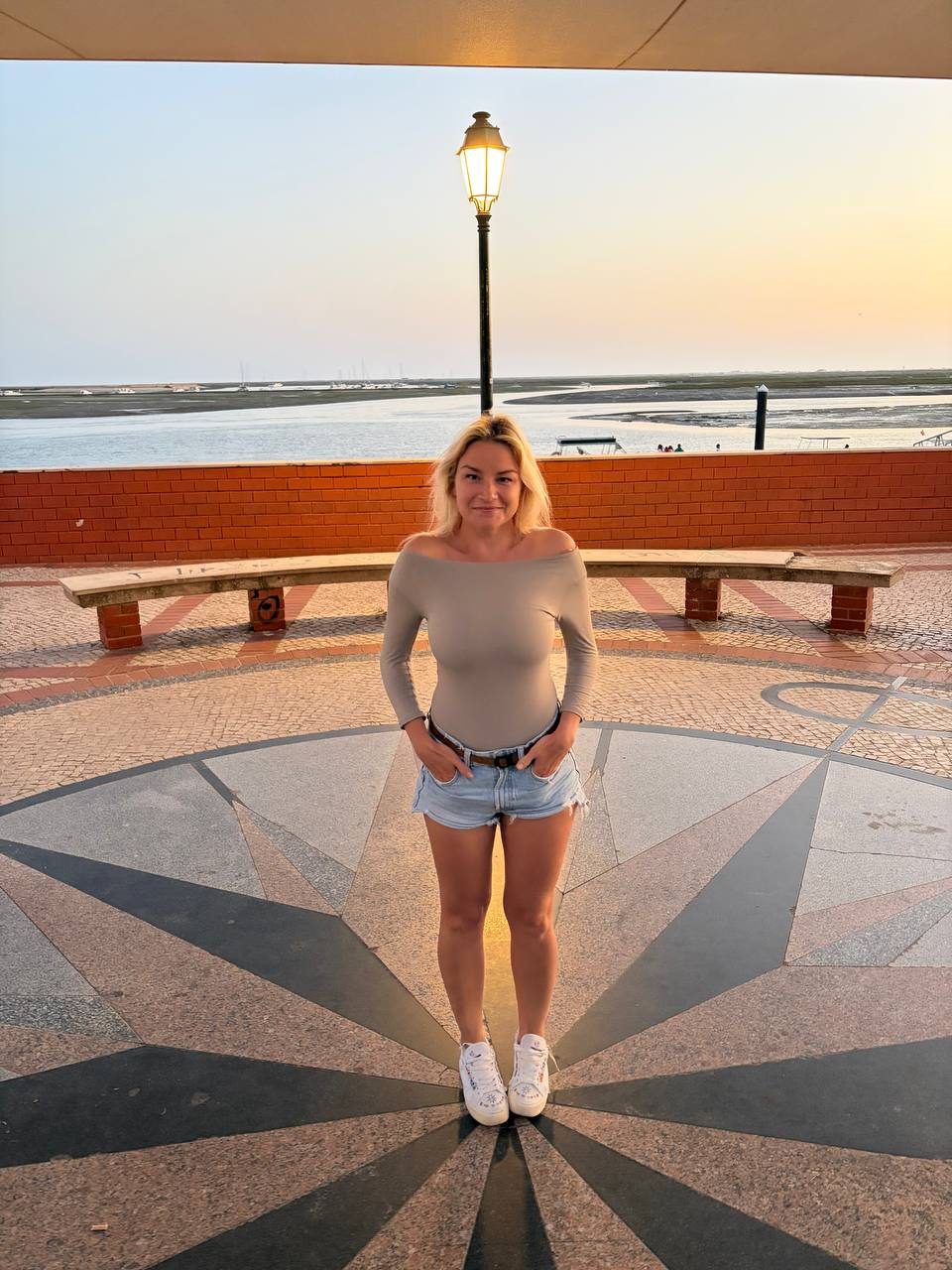
Meanwhile, so as not to sink headfirst into depression, I started organising get-togethers for people in the same boat. Emigration makes you turn yourself inside out, especially without the language: you think like an adult and come out with a child’s sentences about the nice weather. So I understand everyone who is on that road right now. It’s never easy, however carefully you try to cushion the fall.
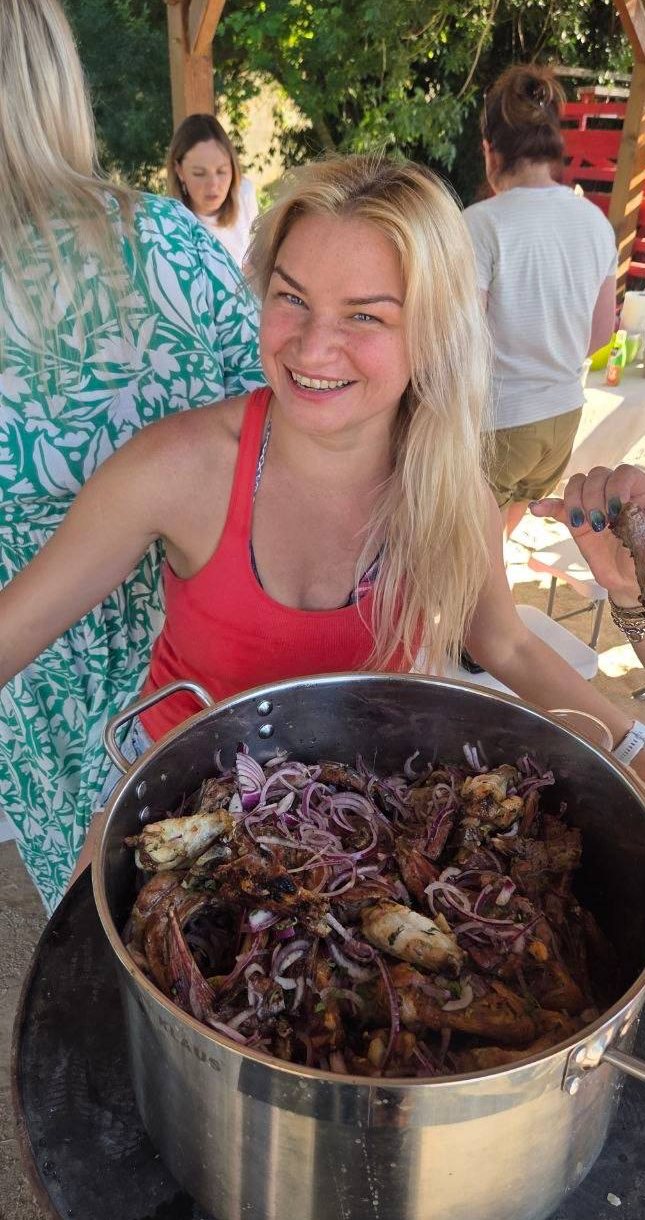
My first project was the campsite weekend. It was May, and I was dying for shashlik. Anyone who lives in the South knows you can’t light a fire wherever you fancy here; you need a place where it’s allowed. So I thought: the girls and I will rent a cabin at a campsite and grill. I pictured ten or fifteen of us. Eighty turned up - with their children.
That’s how I got hooked on our community. At first it was a chat for the people who’d been to that campsite, about sixty of them. Now there are more than 700 of us in the chat for Russian speakers in the South of France, and out of it grow picnics, Maslenitsa, karaoke, concerts and parties - everything that has already happened is in the events schedule.
Why I do it
To be honest, at first it was so that I wouldn’t go under myself. Later I realised the aim had been wider from the start: to help people put down roots in French life, not to go stale, and to get through this more easily than I did. A transplanted tree puts down roots first and only then grows branches. People are the same: the sooner someone has solid ground under their feet here, the sooner they start to grow.
In 1943, in London, the French philosopher Simone Weil was writing The Need for Roots (L’Enracinement), and there’s a sentence in it: “To be rooted is perhaps the most important and least recognized need of the human soul.” You couldn’t put it better.
I run the community, and what I want more than anything is for people to come together and help each other. To learn to really see one another - to talk, to listen, to lend a shoulder wherever they can. And for each of us, one by one, to spot our own talents and put every last one of them to use. For people to stay, in any country and any city, who they were at home - or to grow even bigger. Emigration brings a great many opportunities. Yes, it’s hard at first. But the strength turns up, and you keep going.
How we live now
I’m not on my own any more: there’s a whole team around me, people who look the same way and want to put their energy into this. Even those who came to us just once leave with friends. Couples form, the conversation doesn’t end when the meetup does, and families start being friends as families.
People come with all sorts of needs: someone needs a tip on paperwork and the law, someone needs work, someone needs a place to live, and someone simply wants company or support. And the community is the place where people find each other: one has a question, another has the answer, and otherwise they would never have met. Mutual help, support, understanding - that, I’d say, is our whole motto.
We also organise trips away with a stay at a villa, like our two-city Mafia and Gatsby night at the villa in August 2026. If you’d like to put together an event of your own or stay at the villa with us, write in the community chat or to the project address contact@vibe-sud-france.com, and we’ll talk it over. How it usually works is on the page Organise it with us.
Our rules
We don’t discuss politics, religion or anyone’s private life: for us, that’s taboo. Messages like that get deleted from the chat, and those topics don’t come up at meetups. Instead of arguing, we teach each other to make friends again, to listen again, to live again and to trust each other again.
The future I see for us
I want the Russian-speaking community of the South to grow, and those who arrived recently to get back on their feet. New Year together, Maslenitsa together, trips to the sea together. Children who are friends, and a new generation growing up in peace. Ties forming between people from different circles - work, social, any kind at all. The more of us there are and the more varied we are, the richer we ourselves become.
It sounds lovely, but there’s science behind it. In “The Strength of Weak Ties” (1973), Mark Granovetter looked at how professionals from a Boston suburb had found their new jobs: of those who got help from someone they knew, five in six saw that person only now and then. It isn’t close friends but weak ties that lead into other circles, where there’s what your own circle lacks. And in 2004 Lu Hong and Scott Page showed with a mathematical model that, under certain conditions, a randomly assembled group of different problem solvers handles a hard problem better than a group of the most able ones: the most able are too much alike. So the sixty people in our first chat were richer than they knew, and the 700+ of us today all the more so.
At one of our 8 March evenings I told the girls: a woman who emigrates, whatever made her leave, becomes a little different and sees the world differently. Men too, for that matter. For a while, emigration seems to put you lower than where you stood. But if you still have strength in you and there’s a hand nearby - not a lifeline, just a friendly hand - you get up quickly and grow taller than before. More than a century ago, in 1920, Marina Tsvetaeva ended her poem «Кто создан из камня, кто создан из глины…» (“Some are made of stone, some are made of clay…”) like this:
Дробясь о гранитные ваши колена, Я с каждой волной — воскресаю! Да здравствует пена — весёлая пена — Высокая пена морская!
The gist: smashed against your granite knees, I rise again with every wave - long live the foam, the merry, high sea foam.
My story isn’t exactly ordinary, but it isn’t the hardest either. I know a great many emigration stories, some of them break your heart, and you could write a book about almost any of us, or even make a film. But our community looks ahead - to where we grow together. So come and join our chat for Russian speakers in the South of France.
Why a community about the South of France
These are the words of the whole team. It doesn’t matter what your nationality is or what status you have: here people find kindred spirits and answers to their questions. Every emigrant walks a similar road and trips over similar stones. We remember those stones, and we help others get through more gently.
And why the South? Because in our experience, moving here is harder: there’s a lot of bureaucracy, our people are scattered across different towns, and work doesn’t just fall into your lap.
How the project works and who makes this site is explained on the About the Vibe South of France project page. To write Anastasiia an email, use the project address: contact@vibe-sud-france.com.